Cats are living longer than ever. With good nutrition and veterinary care, it's not unusual to see cats reach 18, 19, even 20 years old. That's wonderful. It also means more of us are navigating the particular joys and challenges of caring for a senior cat — and most of us weren't given a roadmap.
Consider this your roadmap. Written from twenty years of watching cats age, from the exam room and from the living room floor.
1. "Senior" Starts Earlier Than You Think
Most veterinarians consider cats "mature" at 7–10 years and "senior" at 11+. But the physiological changes begin earlier than most owners realize. By age 7, your cat's kidneys, thyroid, and joints are already showing the first subtle signs of age-related change — invisible to the naked eye but detectable with bloodwork.
2. Pain Is the Most Underdiagnosed Condition in Senior Cats
Arthritis affects an estimated 90% of cats over 12 years old. Ninety percent. And the vast majority are never diagnosed, because cats are extraordinary at hiding pain. They don't limp the way dogs do. They just... slow down. Stop jumping to their favorite spots. Sleep more. And their owners think: they're just getting old.
Sometimes that's true. But often, they're in pain. And pain in cats is treatable.
3. The Litter Box Needs to Evolve With Your Cat
A litter box that worked perfectly for a young, agile cat may become an obstacle course for a senior. High sides are hard to climb over with arthritic joints. Senior cats need low-entry litter boxes — ideally with one side cut down to just a few inches — placed on every floor of the home.
This is one of the simplest, cheapest, most impactful changes you can make for an older cat's quality of life. And yet I see it overlooked constantly.
4. Hydration Becomes Even More Critical
Kidney disease is the leading cause of death in senior cats. The kidneys' ability to concentrate urine decreases with age, which means senior cats need more water to process the same amount of waste. Wet food, water fountains, and adding water or low-sodium broth to food are all strategies I recommend.
5. Cognitive Decline Is Real — And Manageable
Feline cognitive dysfunction syndrome affects an estimated 28% of cats aged 11–14 and over 50% of cats over 15. Signs include: yowling at night, seeming confused or disoriented, forgetting where the litter box is, and staring at walls.
This is not "just old age." It is a medical condition with management options. If your senior cat is yowling at night, please mention it to your vet. It is not normal. It is treatable.
6. Dental Disease Is Causing Silent Suffering
By age 10, most cats have significant dental disease. Resorptive lesions — a painful condition where the tooth structure breaks down from the inside — affect up to 75% of cats over 5. These are excruciatingly painful. And cats eat through the pain, because they have no choice.
A cat who is eating more slowly, dropping food, or has bad breath is almost certainly dealing with dental pain. A dental cleaning can transform a senior cat's quality of life almost overnight. I have seen cats who seemed "old and slowing down" become playful and engaged within weeks of a dental procedure.
7. They Feel the Cold More
Senior cats lose muscle mass, which reduces their ability to generate and retain body heat. A heated bed is not a luxury for a senior cat — it's a genuine comfort measure that reduces joint pain and improves sleep quality. I put a K&H heated bed in every senior cat's home I visit. The difference in how they carry themselves is visible within days.
8. Watch Their Weight — In Both Directions
Weight loss in senior cats is almost always significant. Hyperthyroidism, diabetes, kidney disease, cancer, and dental pain can all cause weight loss. A half-pound loss in a ten-pound cat is a 5% body weight change. Monthly weigh-ins at home give you data that your vet will find invaluable.
9. They Need Gentler, More Frequent Connection
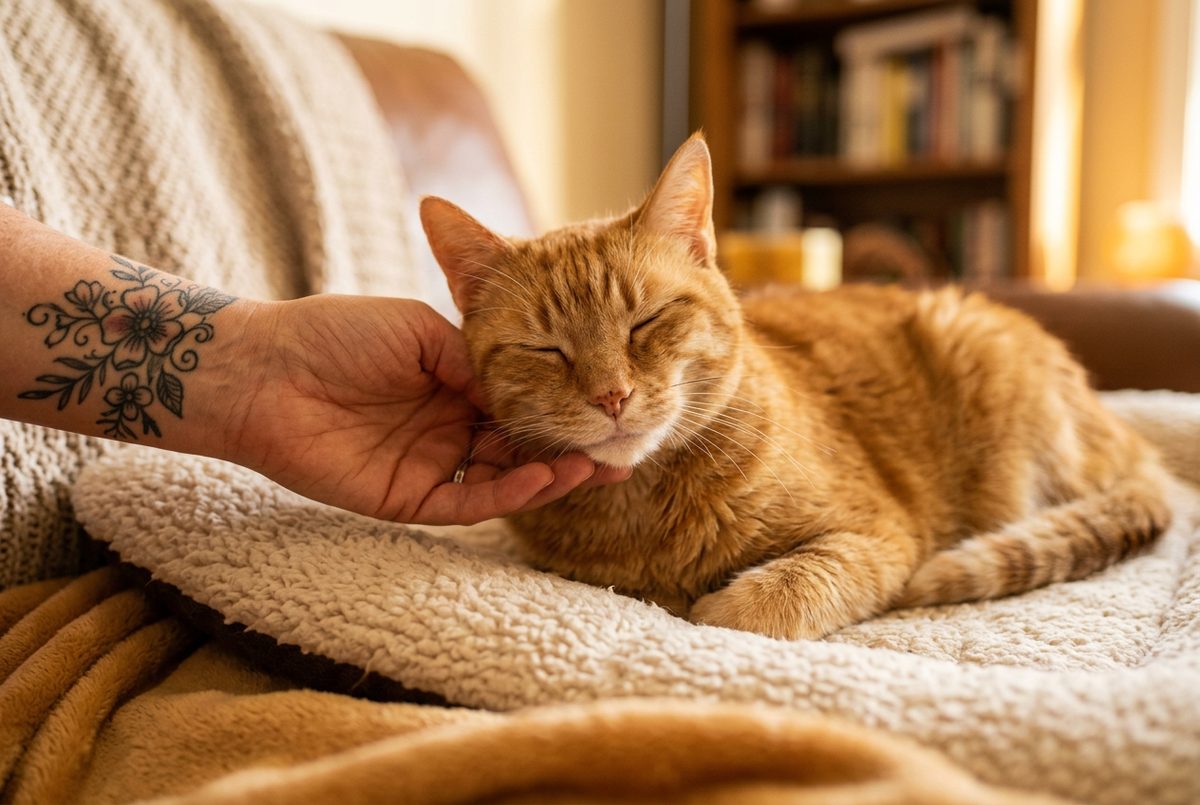
Senior cats often become either more affectionate or more withdrawn. Both are normal. What they need, regardless of which direction they go, is gentle, consistent presence. Short, calm interactions. Soft voices. Slow movements. The patience to let them set the pace.
Slow blinking works beautifully here — the cat equivalent of a smile. Make soft eye contact and blink slowly. If they blink back, you've just had a conversation.
10. Quality of Life Is the Goal — Not Just Length of Life
As our cats age, there comes a point where the question shifts from "how do we keep them alive longer" to "how do we make the time they have as good as possible."
Are they eating? Are they comfortable? Are they able to do the things that matter to them — sitting in the sun, being near you, watching birds from the window? Are they having more good days than bad?
These are the questions I sit with owners through. They are not easy questions. But they are the right ones.
Every Year Past Ten Is a Gift
Every morning they greet you, every evening they settle beside you, every slow blink they offer — these are not small things. They are the accumulated weight of a life shared, a trust built over years, a love that has had time to deepen into something quiet and profound.
Care for them the way they have cared for you — with patience, with presence, with the willingness to pay attention to what they need even when they can't tell you in words.
They have been telling you all along. You just have to know how to listen.
— Lynne 🐾