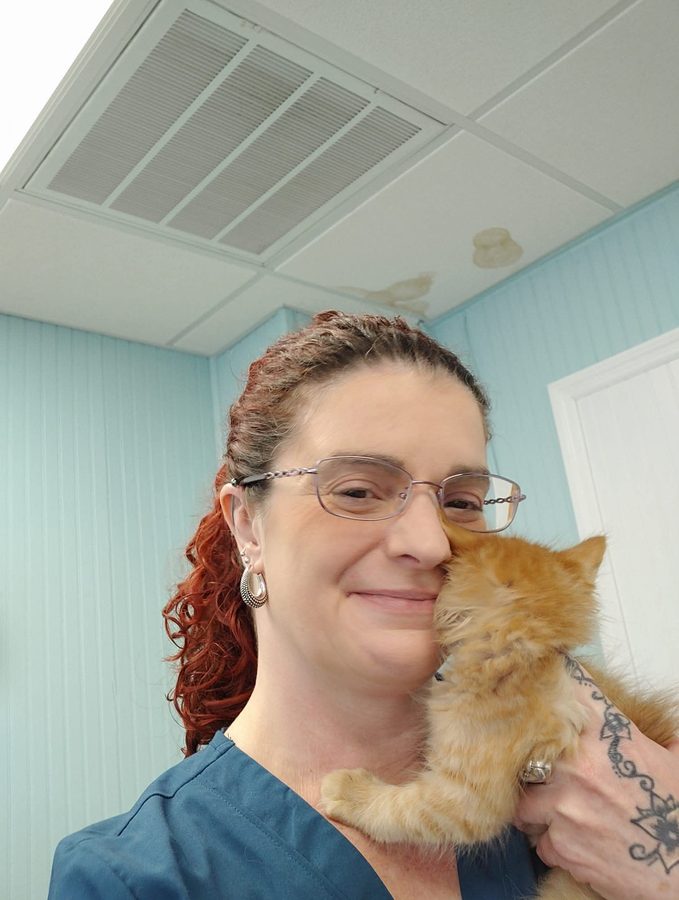
Cats communicate constantly. They just don't do it the way we expect. They're not loud about it. They're not obvious. They're cats.
The owners who worry me most aren't the ones who call me at midnight because their cat sneezed twice. The owners who worry me are the ones who say, three months into a problem: "I just thought she was being moody."
Cats are masters of hiding discomfort. It's evolutionary — in the wild, showing weakness invites predators. Your cat, even in the safest, most loved home in the world, is still wired to mask pain until it becomes impossible to hide.
That's why these seven signals matter. They could genuinely save your cat's life.
1. Sudden Changes in Grooming
Cats are fastidious. If yours has always been immaculate and suddenly looks unkempt — dull coat, matted patches, greasy fur — that's not laziness. That's a red flag.
Over-grooming is equally telling. A cat licking one spot obsessively, creating bald patches or raw skin, is almost always dealing with something: allergies, pain in that area, anxiety, or a skin condition.
2. Litter Box Changes
The litter box is a diagnostic tool. I mean that clinically. Changes in frequency, consistency, or the act of going outside the box are among the earliest signs of urinary issues, kidney disease, and diabetes.
A cat who suddenly starts going outside the box isn't being spiteful. Cats don't do spite. They're telling you something hurts, or they've associated the box with pain and are trying to find somewhere that doesn't.
3. Hiding More Than Usual
Every cat has hiding spots. What's not normal is a cat who suddenly disappears for hours, stops coming out for meals, or flinches when you reach for them.
Hiding is how cats say I don't feel well and I need to be left alone to manage it. Trust the hiding. If it's new and persistent — call your vet.
4. Subtle Appetite Changes
Not eating at all is obvious. I'm talking about the subtle stuff: eating a little less, eating more slowly, leaving food they normally love. Or suddenly becoming obsessed with food when they were previously indifferent.
Increased appetite in a cat who is losing weight is a classic sign of hyperthyroidism — extremely common in cats over ten. Decreased appetite can signal dental pain, which is the most underdiagnosed condition in cats, by the way.
5. Vocalization Changes
What matters is the change from their baseline. A quiet cat who suddenly starts yowling at night — especially an older cat — is often in pain, disoriented, or experiencing cognitive decline.
Night yowling in senior cats is something I take very seriously. It can indicate hypertension, hyperthyroidism, or cognitive dysfunction. It is not "just getting old." It is a symptom.
6. Social Behavior Shifts
A cat who suddenly becomes clingy when they were independent, or suddenly withdraws when they were affectionate — both are worth noting. Cats don't change their personalities without reason.
Sudden clinginess can indicate anxiety or early cognitive decline. Sudden withdrawal often means pain or illness. Either way, a personality shift is your cat saying: something has changed.
7. Eye Changes
A cat squinting one eye, showing the third eyelid (that pale membrane from the inner corner), or with new discharge needs to be seen. Eye issues escalate quickly in cats, and some conditions — like a corneal ulcer — are genuinely urgent.
I've seen cats lose vision because an owner waited a week to see if it would "clear up on its own." Please don't wait on eye symptoms.
You Know Your Cat Better Than Any Vet Does
You know their baseline — their normal, their quirks, their rhythms. That knowledge is your most powerful diagnostic tool. When something feels off, it usually is.
You don't need to know what's wrong. You just need to notice that something is different. That's enough. That's everything.
— Lynne 🐾